
Beginning with M2M communication in industry 4.0, the narrative unfolds in a compelling and distinctive manner, drawing readers into a story that promises to be both engaging and uniquely memorable.
Machine-to-Machine (M2M) communication is a cornerstone of Industry 4.0, enabling seamless interaction between devices and systems. This technology empowers industries to optimize their operations through real-time data exchange, driving innovation and enhancing efficiency across manufacturing, logistics, and supply chains.
M2M Communication Overview
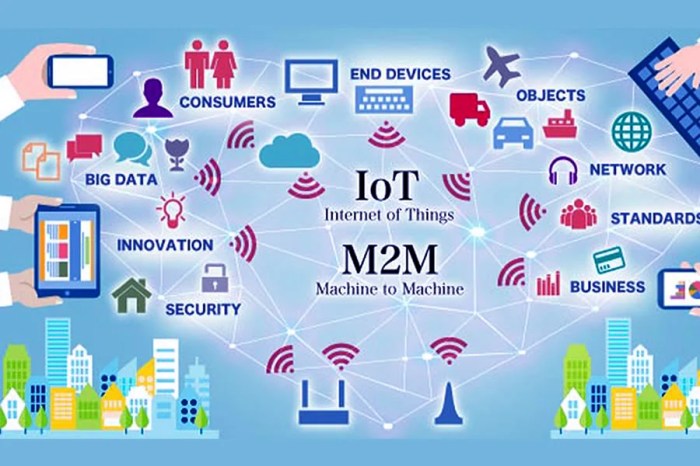
M2M communication, or machine-to-machine communication, forms the backbone of Industry 4.0, enabling seamless interaction between devices and systems. This technology allows machines to communicate autonomously, exchanging data and insights that drive efficiency, productivity, and innovation across various sectors.M2M communication leverages a variety of technologies that facilitate real-time data transfer between devices, ensuring that information is accurately relayed and acted upon.
The Internet of Things (IoT) plays a pivotal role in this ecosystem by connecting physical devices to the internet, allowing them to send and receive data. Wireless networks, such as cellular, Wi-Fi, and LPWAN (Low Power Wide Area Network), are essential in providing the connectivity needed for M2M communication, enabling devices to operate in diverse environments without the constraints of physical wiring.
Technologies Enabling M2M Communication
The significance of M2M communication is amplified by several key technologies that work in tandem to create a robust communication framework. The following technologies are fundamental in facilitating M2M interactions:
- Internet of Things (IoT): IoT encompasses a vast network of interconnected devices that communicate data over the internet. This technology enhances operational capabilities in industries by enabling remote monitoring and control.
- Wireless Networks: Technologies such as Wi-Fi, cellular networks, and LPWAN provide the necessary infrastructure for M2M connectivity. These networks support various applications, from smart agriculture to industrial automation, ensuring devices can communicate effectively regardless of location.
- Cloud Computing: Cloud services offer scalable storage and processing capabilities, allowing M2M systems to handle large volumes of data generated by connected devices. This facilitates data analysis and decision-making in real-time.
- Edge Computing: By processing data closer to the source, edge computing reduces latency and bandwidth usage. This technology is crucial for applications requiring immediate responses, such as autonomous vehicles and industrial robotics.
Data Communication Protocols in M2M Communication
Data communication protocols are vital for ensuring that devices can exchange information coherently and reliably. These protocols define the rules and standards for data transmission, which is crucial in M2M scenarios where devices from different manufacturers must communicate seamlessly.The importance of effective data communication protocols is underscored by the following points:
- MQTT (Message Queuing Telemetry Transport): A lightweight messaging protocol designed for low-bandwidth, high-latency networks, MQTT is ideal for M2M applications where efficient data transfer is essential.
- CoAP (Constrained Application Protocol): CoAP is designed for simple devices and low-power networks, making it suitable for IoT applications. It allows for efficient communication in constrained environments.
- HTTP/HTTPS: While traditionally used for web traffic, HTTP and HTTPS protocols are also employed in M2M communication for devices requiring secure data transmission over the internet.
- LoRaWAN (Long Range Wide Area Network): This protocol supports long-range transmissions with low power consumption, making it ideal for applications such as smart metering and remote monitoring.
Effective data communication protocols enhance interoperability between devices, leading to improved operational efficiency and reduced errors in M2M communication.
Applications of M2M Communication in Industry 4.0
M2M communication is revolutionizing various sectors, particularly in the context of Industry 4.0. The integration of these technologies enhances operational efficiency, drives innovation, and fosters a connected ecosystem of machines and devices that work together seamlessly. This synergy enables industries to respond swiftly to challenges and demands, ultimately optimizing processes and outcomes.
Applications in Manufacturing, Logistics, and Supply Chain Management
The role of M2M communication spans multiple domains within Industry 4.0, significantly improving operations in manufacturing, logistics, and supply chain management. Here are some notable applications across these sectors:
- Manufacturing: Smart factories leverage M2M communication for real-time monitoring of equipment and processes. For instance, manufacturers use sensors to track machine performance and production metrics, enabling immediate adjustments to production lines.
- Logistics: In logistics, M2M applications facilitate fleet tracking and inventory management. Delivery vehicles equipped with GPS and sensors allow companies to optimize routes and reduce fuel consumption, enhancing delivery efficiency.
- Supply Chain Management: M2M communication enables better visibility across the supply chain. Companies can track goods in transit, monitor conditions of sensitive products (like perishables), and automate reordering processes based on real-time inventory levels.
Impact on Predictive Maintenance and Operational Efficiency
The implementation of M2M communication fosters predictive maintenance, which is crucial for operational efficiency. By collecting data from machines and equipment, organizations can anticipate failures before they occur. This proactive approach significantly reduces downtime and maintenance costs. For instance:
“Predictive maintenance can reduce maintenance costs by 30-40% and increase equipment uptime by 10-20%.”
M2M systems analyze data trends to predict when a machine is likely to fail, enabling timely interventions. This not only conserves resources but also enhances productivity by ensuring that machinery operates at optimal performance levels.
Case Studies of Successful M2M Implementations
Several companies have successfully harnessed M2M solutions to streamline their processes and achieve substantial improvements in productivity and efficiency. Below are some exemplary case studies:
- Siemens: Siemens implemented M2M communication in its manufacturing plants to enhance automation and real-time monitoring. This initiative resulted in a 20% increase in productivity and a significant reduction in operating costs.
- Geodis: The logistics company Geodis utilized M2M technology to enhance its warehouse operations. By employing RFID tags and sensors, Geodis improved inventory accuracy and reduced order fulfillment time by 30%.
- Procter & Gamble: P&G adopted M2M strategies to optimize its supply chain. By integrating sensors across its production and distribution processes, the company gained real-time insights, leading to a 15% increase in operational efficiency.
Future Trends and Challenges in M2M Communication
M2M communication is evolving rapidly, setting the stage for transformative advancements in the industrial landscape. As technology progresses, we can anticipate significant changes in how machines communicate, enhancing operational efficiencies and productivity. However, this evolution brings along its own set of challenges, particularly in security and compliance with data privacy regulations.
Emerging Technologies Enhancing M2M Communication
Several emerging technologies are poised to enhance M2M communication in industrial settings, paving the way for smarter operations and improved connectivity.
| Technology | Features | Applications |
|---|---|---|
| 5G Networks | Faster data transfer rates, low latency, and increased device connections. | Real-time monitoring and control of industrial processes. |
| Edge Computing | Data processing closer to the source, reducing latency and bandwidth usage. | Immediate data analytics for quick decision-making in production environments. |
| Artificial Intelligence (AI) | Enhanced data analysis, predictive maintenance, and automated responses. | Smart factory environments and optimizing supply chains. |
| Blockchain Technology | Increased security, transparency, and traceability of data transactions. | Supply chain management, ensuring data integrity and authenticity. |
| Internet of Things (IoT) | Interconnected devices providing real-time data and insights. | Smart devices and sensors for automation in various industrial applications. |
Potential Security Risks in M2M Communication
As M2M communication becomes more integral to industrial processes, security risks become a pressing concern. With devices constantly transmitting data, vulnerabilities can arise, leading to potential breaches.
- Increased attack surface due to a higher number of connected devices.
- Lack of standardized security protocols across different devices and platforms.
- Risks of unauthorized access to sensitive industrial data, leading to operational disruptions or intellectual property theft.
- Challenges in ensuring end-to-end encryption in data transmission, potentially exposing data to interception.
“Securing M2M communication is paramount, as breaches can have severe implications on both operational integrity and data privacy.”
Implications of Data Privacy Regulations on M2M Communication
Data privacy regulations significantly impact M2M communication, dictating how data is collected, stored, and processed. With regulations like GDPR and CCPA in effect, compliance is essential.
- Necessity for explicit consent from users before collecting data.
- Increased accountability for data breaches, with potential financial penalties for violations.
- Requirement for organizations to implement robust data protection measures, including encryption and access controls.
- Need to ensure transparency in data usage, fostering trust between companies and consumers.
“Navigating data privacy regulations is vital for companies engaged in M2M communication, as compliance can directly influence their operational strategies.”
Steps for Implementing M2M Systems in an Industrial Environment
Implementing M2M systems in an industrial setting involves a structured approach to ensure successful integration and operation. The following steps Artikel a roadmap for organizations:
- Assess current infrastructure and identify areas for M2M integration.
- Define specific objectives and use cases for M2M communication.
- Choose suitable technologies and platforms that align with operational needs.
- Establish security protocols to protect data and devices throughout the network.
- Train staff on the new systems and processes to ensure smooth adoption.
- Monitor and evaluate M2M systems continuously to optimize performance and address any emerging challenges.
Last Recap
As we look ahead, M2M communication in industry 4.0 stands poised to revolutionize the way businesses operate, tackling challenges such as security and data privacy while embracing emerging technologies. The journey of integrating M2M solutions not only enhances operational efficiency but also sets the stage for a smarter, more connected industrial future.
FAQ Guide
What is M2M communication?
M2M communication refers to the direct exchange of data between devices without human intervention, enabling automation and improved operational efficiency.
How does M2M communication enhance productivity?
By facilitating real-time data exchange, M2M communication allows for quicker decision-making, predictive maintenance, and streamlined processes, ultimately boosting productivity.
What are the key technologies enabling M2M communication?
Key technologies include Internet of Things (IoT) devices, wireless networks, and various data communication protocols that support device connectivity.
What industries benefit from M2M communication?
Industries such as manufacturing, logistics, healthcare, and agriculture benefit significantly from M2M communication through enhanced efficiency and cost savings.
What are the security concerns related to M2M communication?
Security risks include unauthorized access to devices, data breaches, and potential disruptions in operations, making robust security measures essential.