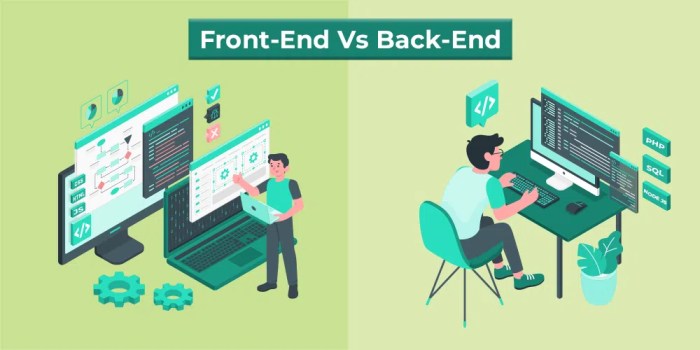
Backend vs frontend development represents two essential pillars of web development, each playing a crucial role in creating dynamic and user-friendly applications. As we delve into this topic, we’ll explore the distinct functions of frontend and backend development, highlighting how they work together seamlessly to enhance user experiences. From the design elements that users interact with to the behind-the-scenes processes that ensure everything runs smoothly, understanding these two areas is vital for anyone looking to grasp the full landscape of web development.
In frontend development, technologies like HTML, CSS, and JavaScript come together to create visually appealing interfaces, while backend development relies on powerful programming languages such as Python, Ruby, and PHP to manage data and server-side logistics. This article will navigate through popular frameworks, database choices, and the relationship between web hosting and domain names, providing you with a well-rounded perspective on both domains.
Frontend Development
Frontend development plays a crucial role in web design and user experience, serving as the bridge between users and the backend of a web application. It encompasses all the visual aspects and interactivity that users engage with directly. A well-executed frontend ensures that users have a seamless and enjoyable experience navigating through a website or web application.The core technologies that define frontend development include HTML, CSS, and JavaScript.
HTML (HyperText Markup Language) provides the structural foundation for web pages, allowing developers to create and organize content. CSS (Cascading Style Sheets) enhances the presentation of HTML, enabling customization of layouts, colors, and fonts to improve aesthetics and usability. JavaScript adds interactivity, allowing developers to implement dynamic features such as animations, form validations, and real-time updates, making web applications feel responsive and engaging.
Key Technologies in Frontend Development
The effectiveness of frontend development is largely determined by the technologies utilized. Here are the key components:
- HTML: This markup language is essential for structuring content on the web. It defines elements like headings, paragraphs, links, and images.
- CSS: CSS is vital for styling HTML elements, improving the visual appeal of a webpage. It allows for responsive designs that adapt to different screen sizes.
- JavaScript: JavaScript is a programming language that enables interactive and dynamic content, enhancing user engagement with features such as sliders, pop-ups, and form validation.
Popular Frontend Frameworks
Frontend frameworks significantly streamline the development process by offering prebuilt components and tools. Here’s a comparison of three widely-used frameworks:
- React: Developed by Facebook, React is renowned for its efficient rendering and component-based architecture. It allows developers to create reusable UI components, making the development process faster and more organized. React’s virtual DOM enhances performance, especially in applications with complex user interfaces.
- Angular: Angular, maintained by Google, is a comprehensive framework that offers a wide range of built-in functionalities for building dynamic web applications. Its two-way data binding and dependency injection features simplify development, making it suitable for larger applications.
- Vue.js: Vue.js is known for its simplicity and ease of integration. It’s lightweight and offers reactive data binding, making it a great choice for both small projects and larger applications. The straightforward learning curve attracts many new developers.
Frontend development is not just about aesthetics; it’s the art of creating engaging and intuitive user experiences.
Backend Development
Backend development is a crucial part of web applications that focuses on server-side logic, databases, and application integration. While frontend development handles what users see and interact with, backend development ensures that everything behind the scenes works smoothly. It deals with the server, database, and application architecture, making it indispensable for delivering a seamless user experience. Without robust backend functionality, applications would struggle to manage data and user requests effectively.Backend development primarily utilizes several programming languages that cater to different requirements and capabilities.
The main languages include Python, known for its readability and efficiency; Ruby, which emphasizes simplicity and productivity; and PHP, a widely-used language for server-side scripting. Each language has its strengths and is chosen based on the specific needs of a project, whether it be rapid development, ease of use, or performance.
Main Programming Languages for Backend Development
The selection of a programming language for backend development significantly impacts project outcomes. Each language mentioned has distinct features that appeal to various developers and project requirements.
- Python: Highly favored for its simplicity and extensive libraries, Python is ideal for rapid development and data-heavy applications. Frameworks like Django and Flask enhance its capabilities for backend development.
- Ruby: Ruby, particularly with the Ruby on Rails framework, allows for quick application development with a focus on convention over configuration, making it a favorite for startups.
- PHP: PHP powers a significant portion of the web and is known for its ease of integration with HTML. It is particularly strong in content-driven websites and applications, with frameworks such as Laravel enhancing its utility.
Role of Databases in Backend Development
Databases play a pivotal role in backend development as they store, retrieve, and manage data efficiently. The choice between SQL and NoSQL databases can greatly influence the scalability and performance of an application.
Databases are the backbone of backend systems, managing data storage and retrieval seamlessly.
Both SQL (Structured Query Language) and NoSQL databases serve distinct purposes and are chosen based on specific project needs. SQL databases like MySQL and PostgreSQL are relational and use structured schemas, making them great for applications requiring complex queries and transactions. They ensure data integrity and support relationships between entities.On the other hand, NoSQL databases like MongoDB and CouchDB offer flexibility with unstructured data and are designed to scale horizontally.
They allow for rapid application development, especially when dealing with large volumes of diverse data.
- SQL Databases: Best for applications needing complex queries, data integrity, and relationships. They are ideal for transactional systems, such as banking and e-commerce.
- NoSQL Databases: Excellent for applications with large-scale data needs and flexible data models. They fit well in real-time analytics, social networks, and content management systems.
Web Hosting and Domain Names
Web hosting and domain names are fundamental components of any website, serving as the digital home and address for online content. Understanding their relationship is crucial for both frontend and backend developers, as it impacts how websites are accessed and function for users.The backend development of a website is heavily intertwined with web hosting, as it determines how server-side scripts are run, how databases are accessed, and ultimately how the frontend interacts with the server.
The hosting environment needs to support the technologies used in the backend, ensuring seamless communication between the client (frontend) and server (backend). A well-configured hosting service will enhance the performance of both the frontend and backend, ensuring that users experience fast load times and smooth interactions.
Steps to Register a Domain Name and Set Up Web Hosting
Registering a domain name and setting up web hosting is a systematic process that involves several key steps. Proper execution of these steps can significantly influence the online presence of a website.
1. Choose a Domain Name
Select a unique and memorable name that accurately represents your brand or the purpose of your website.
2. Check Domain Availability
Use a domain registrar’s search tool to ensure that the desired domain name is available. If it’s already taken, consider variations or different domain extensions (e.g., .com, .net, .org).
3. Register the Domain
Once you find an available domain, proceed to register it through a reputable domain registrar. Provide the necessary information and complete the purchase.
4. Select a Web Hosting Provider
Research and choose a hosting provider based on your needs—consider factors like storage, bandwidth, pricing, and support.
5. Choose a Hosting Plan
Select a hosting plan that aligns with your website’s requirements. Ensure it supports the technologies you’ll be using for both frontend and backend development.
6. Configure DNS Settings
Once the domain is registered, update the Domain Name System (DNS) settings to point to your hosting provider’s servers.
7. Upload Website Files
Using FTP or your hosting provider’s file manager, upload your website files to the server.
8. Test the Website
Finally, test the website to ensure that everything functions correctly, making any necessary adjustments.
Popular Web Hosting Services and Their Features
There are numerous web hosting services available, each offering varied features to accommodate different needs. Below is a comparison of some popular options, highlighting their key offerings.
| Hosting Service | Features |
|---|---|
| Bluehost |
|
| SiteGround |
|
| A2 Hosting |
|
The selection of a hosting service greatly influences both the backend processes and the frontend user experience. For example, a service like Bluehost is often recommended for beginners due to its user-friendly interface, while A2 Hosting appeals to developers seeking high performance and control. Each choice can lead to different experiences for website visitors and developers alike.
Final Conclusion
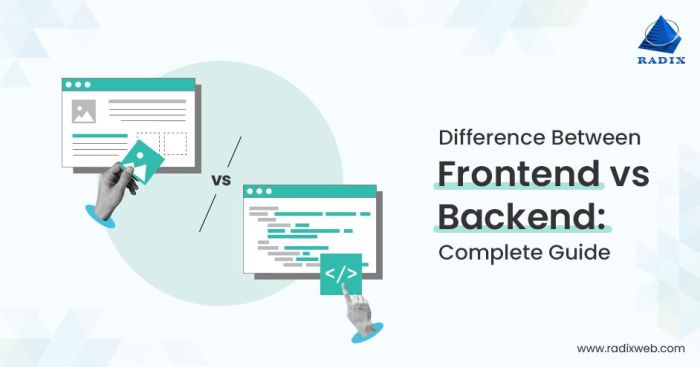
In conclusion, the interplay between backend and frontend development is what ultimately shapes the digital experiences we encounter daily. By understanding the unique attributes and responsibilities of each area, developers can create holistic solutions that not only meet user needs but also elevate the quality of web applications. As technology continues to evolve, staying informed about these distinctions will be key for both aspiring and seasoned developers alike.
FAQ Insights
What is the main difference between frontend and backend development?
Frontend development focuses on the visual elements and user interface, while backend development handles the server-side operations and database management.
Can a developer specialize in both frontend and backend development?
Yes, developers who specialize in both areas are often referred to as full-stack developers.
Which programming languages are primarily used for frontend development?
Frontend development mainly uses HTML, CSS, and JavaScript.
What role do databases play in backend development?
Databases store, retrieve, and manage the data that backend applications need to function effectively.
Why is web hosting important for development?
Web hosting provides the necessary infrastructure for storing and serving websites to users, allowing both frontend and backend components to function online.